Church Point Ferry
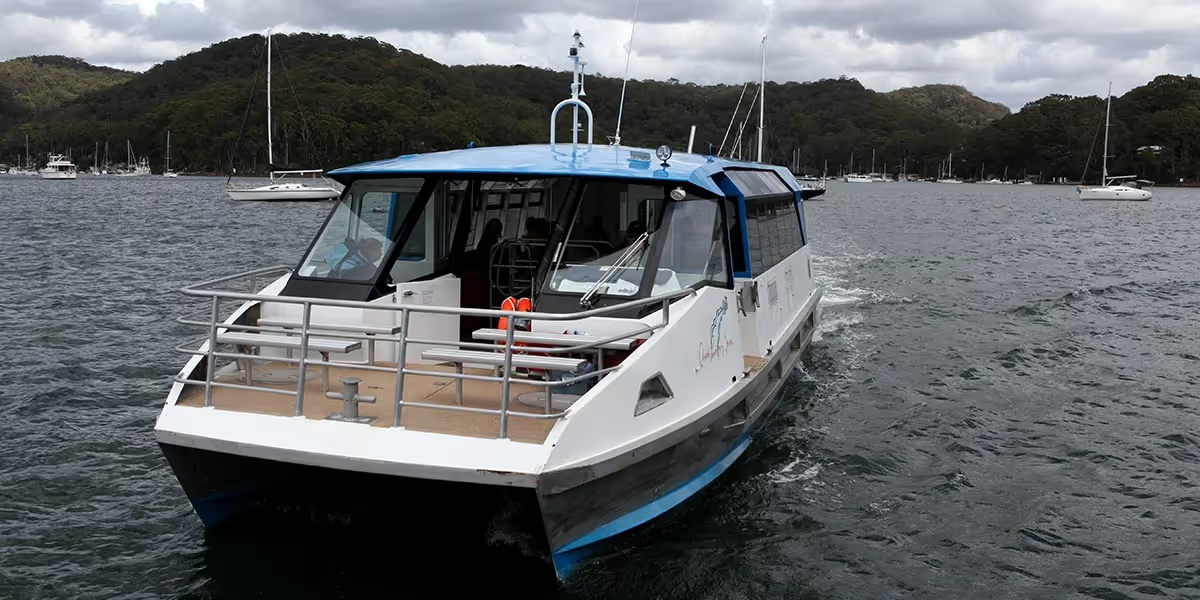

Church Point Ferry Service introduced a pioneering Green Ticket program, enabling passengers to offset emissions and support Australian reforestation.
Date Published: 01/2014
Church Point Ferry Service has connected communities across southern Pittwater since the 1940s. The service provides essential transport for approximately 2,000 residents of Scotland Island and the western foreshore communities of Ku-ring-gai Chase National Park, all of whom rely on water-only access.
Sustainability Drivers
Owners Penny Gleen and Simon Wastell operate a fleet of three vessels:
- L. Duck, one of the primary passenger ferries.
- Amelia K, a modern aluminium ferry known locally as "the Tin Can".
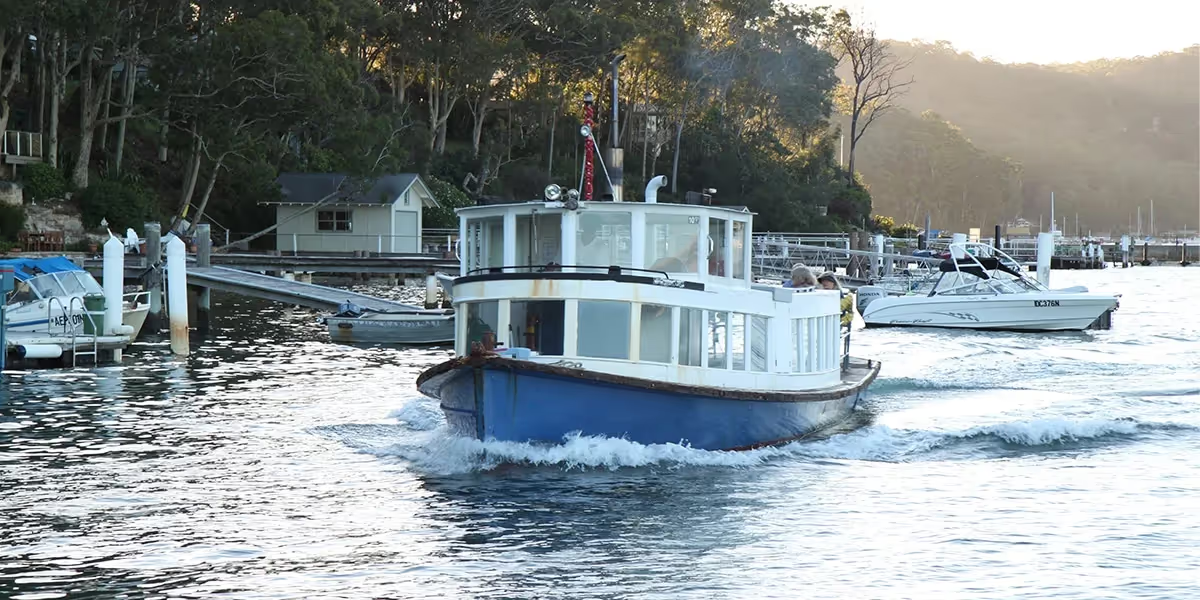
- Elvina, a timber support vessel built in the 1920s.
The owners identified three key sustainability challenges:
- Meeting growing customer expectations for environmental responsibility.
- Complying with Ministry of Transport regulations.
- Implementing credible and transparent sustainability initiatives.
Customer Expectations
The Pittwater community has a strong connection to its surrounding bushland and waterways. Many regular passengers expected local businesses to demonstrate environmental responsibility.
While the ferry service had already implemented recycling, waste reduction and low-impact office operations, the owners wanted to address emissions from ferry operations, which occur multiple times each day, 365 days a year.
Compliance Requirements
As a privately owned ferry operator, Church Point Ferry Service could implement sustainability initiatives. However, ticket structures and pricing were regulated by the Ministry of Transport, limiting the types of environmental programs that could be introduced.
Credible Sustainability Action
To ensure transparency and credibility, Church Point Ferry Service partnered with Pangolin Associates to develop and implement a practical carbon management strategy.
Sustainability Solutions
Green Ticket Program
Church Point Ferry Service introduced a two-part sustainability program combining carbon offsetting and Australian reforestation. On 1 January 2011, the service launched its Green Ticket initiative. Passengers purchasing a 12-trip pass could choose to pay an additional $1, increasing the fare to $60. The additional contribution was directed towards offsetting greenhouse gas emissions from ferry fuel use.
Pangolin Associates:
- Calculated greenhouse gas emissions from ferry operations.
- Managed the purchase and retirement of certified carbon credits.
- Supported communication and education around the program.
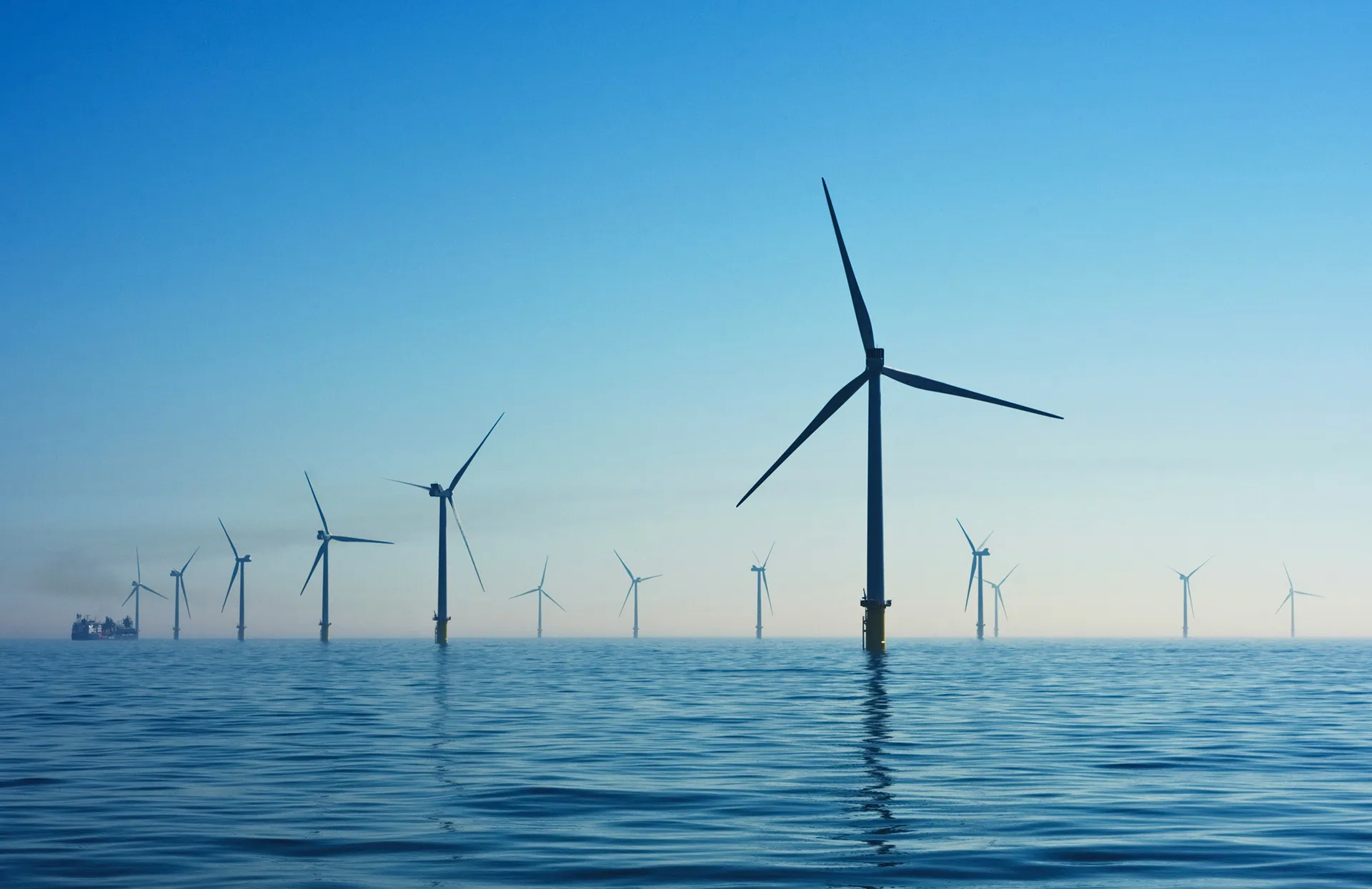
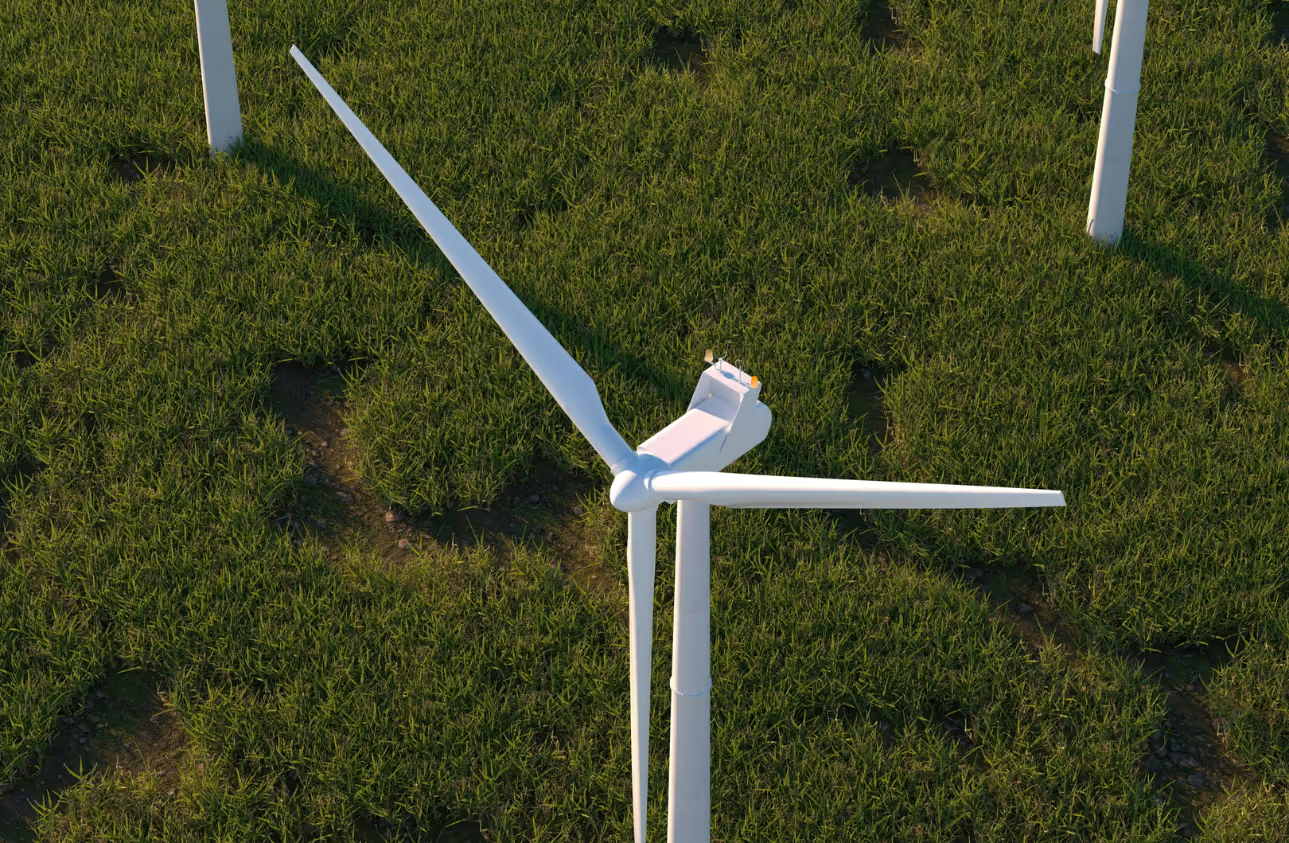
The carbon credits primarily supported renewable energy projects, including wind and solar developments. The initiative allowed passengers to directly contribute to reducing both the ferry service's emissions and their own travel-related environmental impact.
Supporting Australian Reforestation
In addition to purchasing carbon credits, Church Point Ferry Service invested part of each Green Ticket contribution into Australian reforestation projects. Through Trees For Life, passengers helped fund native tree planting projects with long-term management commitments extending for at least 30 years.
Results
The Green Ticket program received strong support from the local community. Three years after launch, Green Ticket uptake consistently represented between 82% and 85% of multi-trip ticket sales.
As at 1 January 2014, the initiative had:
- Offset 256 tonnes of greenhouse gas emissions.
- Funded the planting of 256 native trees.
- Delivered an environmental benefit equivalent to removing approximately 768 cars from the road for one month.
As owner Penny Gleen explained:
"We're chuffed with the response from our passengers, and also because we are the first privately owned ferry service to take on such an important initiative."
Future Initiatives
Church Point Ferry Service continues to pursue further emissions reductions.
Recent initiatives include:
- Upgrading the Amelia K with more fuel-efficient engines.
- Switching ferry office electricity to GreenPower.
The long-term goal is to achieve carbon neutrality across the entire operation.
Request a call back
We welcome your enquiries about sustainability and carbon management.
Follow us on LinkedIn


















.jpg)









Industry Expertise, Shaped by Real-World Experience