Measure
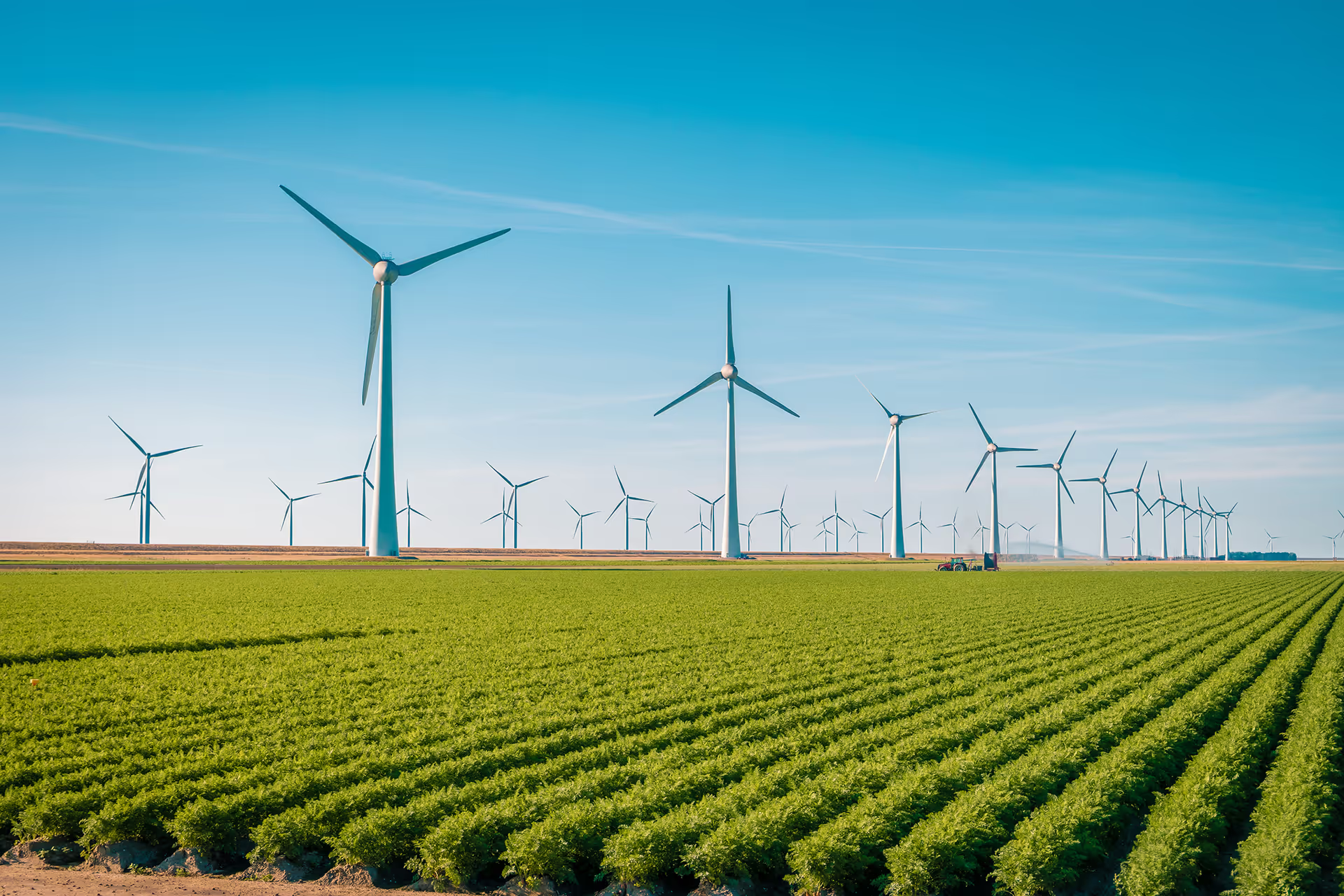
Establish your baseline and understand where you are.
This stage focuses on building a clear, evidence-based understanding of an organisation’s environmental impacts, ESG priorities, and climate-related risks across its operations, products, and value chain.
Organisations’ greenhouse gas emissions are quantified across Scope 1, Scope 2, and Scope 3. Product environmental impacts are measured along its lifecycle. Organisations assess financial and governance readiness, including alignment with frameworks such as ASRS, to identify gaps and define material risks and opportunities.
Establishing this baseline provides a transparent foundation for climate and sustainability commitments and disclosures. It also enables organisations to track progress, evaluate the efficacy of sustainability initiatives, and support informed decision-making over time.
Organisational Carbon Footprint Assessment
Our organisational carbon footprint assessments provide a comprehensive understanding of greenhouse gas emissions across Scope 1, Scope 2 and Scope 3 categories, helping organisations establish credible emissions baselines and identify key sources of impact.
Aligned with the GHG Protocol and ISO 14064-1, our assessments support emissions reduction planning, target setting, climate reporting and compliance with frameworks such as the National Greenhouse and Energy Reporting (NGER) Scheme and the Australian Sustainability Reporting Standard AASB S2.
Life Cycle Assessment (LCA)
Our Life Cycle Assessment (LCA) services provide a comprehensive understanding of the environmental impacts, including embodied carbon, associated with products, buildings and services across their full life cycle, from raw material extraction and manufacturing through to use and end-of-life treatment.
Aligned with the GHG Protocol (Product Standard), ISO 14040, and ISO 14044, our LCAs help organisations identify environmental hotspots, evaluate improvement opportunities, and support informed decision-making across product design, procurement, supply chains, and sustainability strategy. They also support environmental claims, product disclosures, and compliance with requirements such as Environmental Product Declarations (EPDs), green building certifications, and climate-related reporting obligations.
Materiality Assessment
A materiality assessment helps organisations identify and prioritise the ESG issues most relevant to their business and stakeholders. The assessment provides a clear foundation for strategy and reporting, helping organisations prioritise actions and resources where they can have the greatest impact.
In the Australian context, materiality assessments can support AASB S2-aligned climate disclosures by identifying financially material climate-related risks and opportunities. They can also help organisations prepare for evolving reporting requirements, including double materiality considerations under the European Union Corporate Sustainability Reporting Directive (CSRD). Our approach draws on recognised frameworks, including the Global Reporting Initiative (GRI), the International Sustainability Standards Board (ISSB) Standards, and the Corporate Sustainability Reporting Directive (CSRD).
ASRS Gap Assessment and Roadmap
ASRS readiness typically begins with understanding current capabilities and identifying gaps against the AASB S2 standard and legislative requirements.
Through a structured gap assessment, we help organisations identify priorities and develop an ASRS implementation roadmap that supports the alignment and uplift of governance, risk management and other climate-related processes and decision-making, builds cross-functional capability, and establishes a clear, practical pathway to inform funding and initiate mobilisation towards disclosure.
Measure Impact & Set Priorities
Frequently Asked Questions
What is the value of conducting a product life cycle assessment?
A product LCA provides a data-driven understanding of the environmental impacts of a product across its entire life cycle, from raw material extraction through manufacturing, distribution, use, and end-of-life. For organisations, this level of insight is essential for moving beyond assumptions and making evidence-based sustainability decisions.
By translating complex environmental data into clear insights, an LCA empowers organisations to reduce impact, build trust, and future-proof their products through:
- Identifying where the greatest impacts occur across the product life cycle, enabling targeted action where it matters most.
- Supporting eco-design by comparing the impacts of materials, processes, and design choices to reduce emissions, resource use, and waste.
- Providing a foundation for working with suppliers to reduce upstream impacts and improve overall performance.
- Responding to growing demand from customers, investors, and regulators for transparent product environmental performance.
- Preparing for evolving compliance requirements such as Environmental Product Declarations (EPDs) and regulatory frameworks.
Click here to learn more about our Life Cycle Assessment services.
What’s the difference between carbon neutral and net zero?
Carbon neutrality is frequently misinterpreted as being equivalent to net zero. However, they are different concepts with distinct approaches to emissions management.
Carbon Neutrality
Carbon neutrality refers to the concept of neutralising greenhouse gas emissions generated within a defined reporting period through the purchase of carbon offsets, which are tradable carbon units created from projects that reduce or remove emissions elsewhere. Carbon neutrality is typically achieved by first measuring and reducing emissions, and then compensating for any remaining emissions via the purchase of offsets. Many organisations pursue recognised certification schemes, such as Climate Active, an Australian Government-backed program that provides a formal pathway to achieving carbon neutrality.
Net Zero
Net zero is a science-based approach that requires organisations to prioritise deep emissions reductions to reduce emissions as close to zero as possible, in line with achieving global net zero emissions by 2050 and limiting global warming to 1.5°C above pre-industrial levels. Unlike carbon neutrality, net zero requires organisations to minimise emissions at the source, with offsets used only after meaningful reductions have been achieved and limited to addressing a small residual level of emissions.
Request a call back
We welcome your enquiries about sustainability and carbon management.
Follow us on LinkedIn



















.jpg)












Industry Expertise, Shaped by Real-World Experience